Proposed New Tailings Management Facility – Confidential Client (Ontario)
Stormwater Management Control Design
Environmental and hydrological engineering design services were provided in support of the expansion of an existing Tailings Management Facility at a hard rock mine in Northern Ontario for a confidential client. The work focused on assessing surface water management requirements, dam performance under extreme events, and supporting regulatory approvals for the expanded facility.
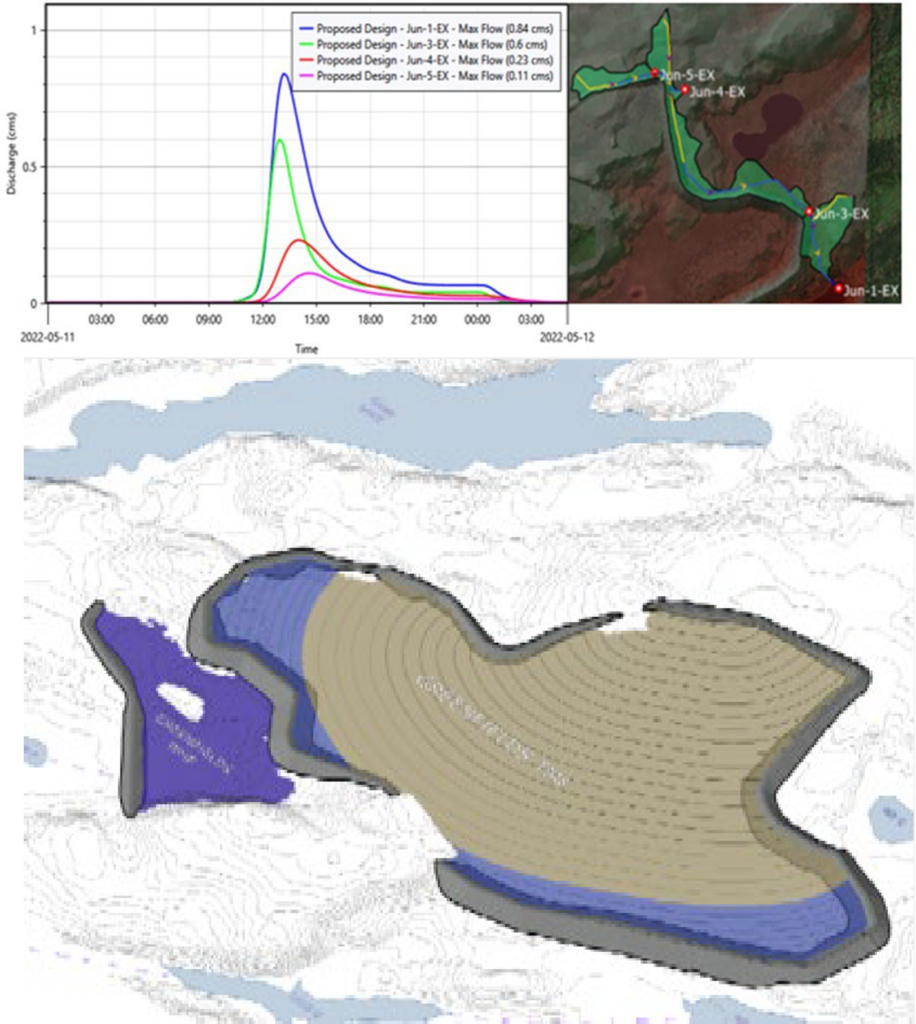
Detailed hydrological and hydrotechnical modelling was completed using LiDAR-derived topographic data integrated within GeoHECRAS. The modelling assessed runoff response, flow conveyance, and hydraulic performance of the existing and proposed infrastructure under high-duration, high-intensity rainfall events. This analysis identified a previously unrecognized high-risk area along the downstream toe of the dam, where concentrated flows had the potential to result in erosion and scour under extreme conditions.
Based on these findings, the design was refined to incorporate targeted energy dissipation and erosion protection measures, including localized armouring and flow attenuation features. These modifications were developed to improve resilience of the dam toe while maintaining compatibility with existing infrastructure and construction constraints.
In parallel, existing stormwater quality data from the operating facility was reviewed to evaluate potential impacts associated with the expansion. The assessment demonstrated that the incremental effect of the expanded facility on the receiving environment would be minimal. This supported a reduced stormwater control approach relative to conventional designs and facilitated a more efficient regulatory approval process.
The overall approach integrated hydrological modelling, risk identification, and targeted design refinement to enhance dam performance while minimizing capital impacts and regulatory burden.
Mine Closure Detailed Engineering Design – Confidential Client (Ontario)
Civil and Environmental Engineering
Civil and environmental engineering services were provided for the closure of a hard rock mining operation in Northern Ontario for a confidential client. The work included full detailed design and preparation of Issued for Construction (IFC) drawings, technical specifications, bid documents, Design Basis Memoranda, and both Class 3 and Class 1 cost estimates to support execution of closure activities.
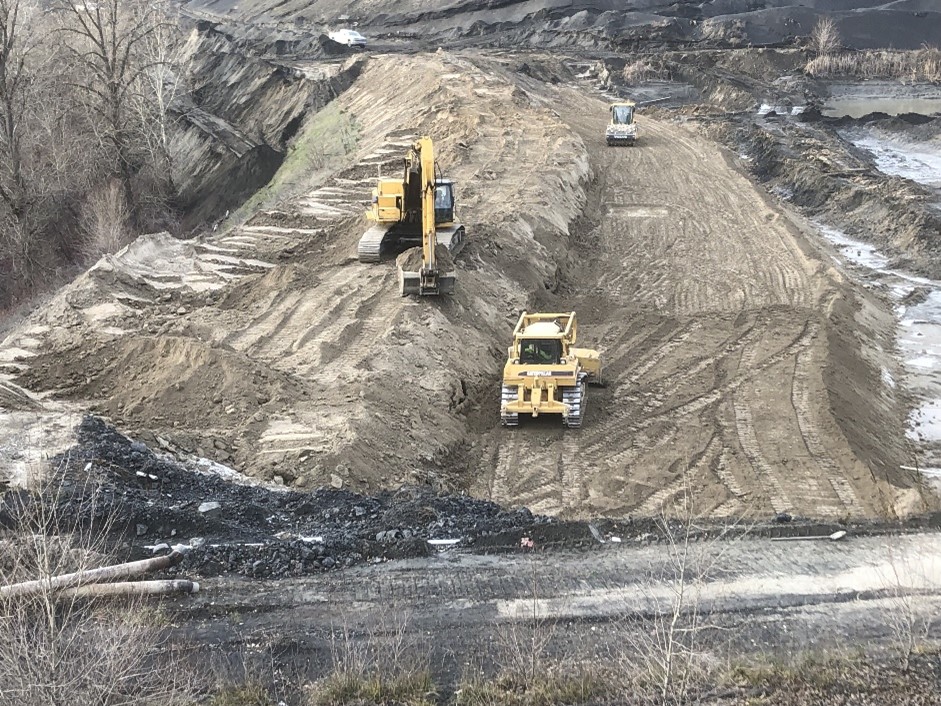
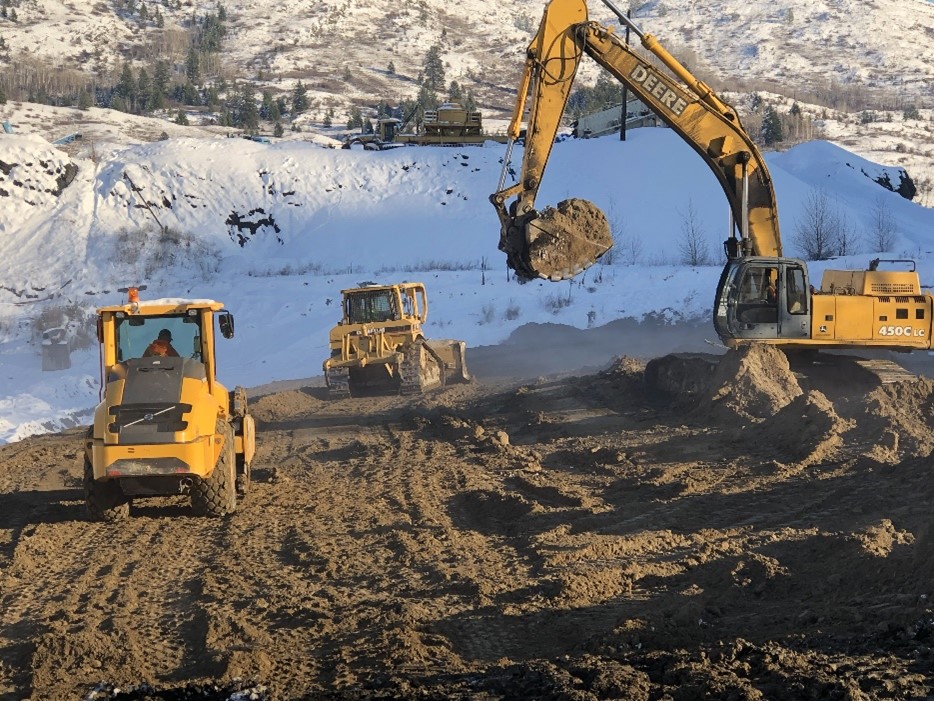
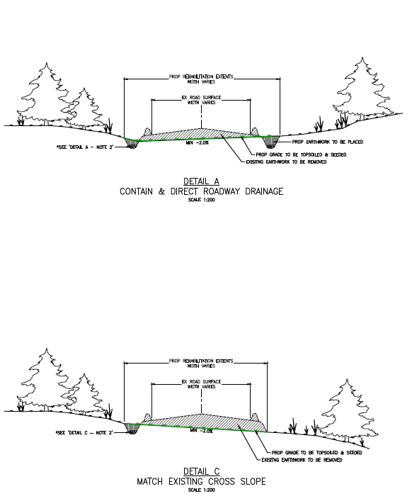
The scope of work addressed closure of major mine infrastructure including tailings management facilities, waste rock piles, mill site areas, internal transportation corridors, and surface water management systems. Design efforts focused on achieving long-term geotechnical stability, effective drainage, and environmental compliance through regrading, erosion control, sedimentation management, and installation of engineered drainage systems .
Detailed earthworks and reclamation strategies were developed using Civil3D-based modelling to define grading extents, material balances, overburden placement, and revegetation requirements. Overburden and waste rock materials were incorporated into the design to optimize resource use, support stable landforms, and provide suitable growth media for long-term vegetation establishment .
Surface water management systems, including diversion channels, berms, and erosion protection measures, were designed to control runoff, prevent ponding, and minimize sediment transport. Channel designs incorporated riprap armouring and graded profiles to maintain hydraulic stability under design storm conditions while integrating with the surrounding landscape .
The design also included decommissioning and closure of underground accesses, fuel and propane systems, and site infrastructure, with a focus on long-term safety, environmental protection, and regulatory compliance. All works were developed in accordance with applicable Ontario mining and environmental regulations and aligned with the site Environmental Management Plan to ensure protection of terrestrial and aquatic habitats throughout construction and post-closure conditions .
Design Basis Memoranda were prepared to define design criteria, assumptions, and methodologies, providing a clear framework for detailed design and construction execution. Cost estimates were developed using model-derived quantities and structured methodologies for direct and indirect costs to support project planning and financial assurance requirements .
The final deliverables provided a complete, construction-ready closure package, integrating engineering design, environmental considerations, and cost certainty to support efficient implementation of the closure plan.
Sedimentation Dam Remediation and Mine Closure Planning – GFRC (BC)
Mine Operation and Closure Planning
Client Grand Forks Reclamation Company (GFRC)
Location: City of Grand Forks, BC
Business Sector: Dam Safety and Dam Remediation
Mine Operation and Closure Planning
Mine Closure / Environmental Planning
History of the GFRC slag deposit
Phoenix Granby mining officials, Spokane entrepreneur J.P. Graves and Quebec investor S.H.C. Miner, were eager to build a smelter somewhere near Grand Forks for their low ‑grade copper ores mined from Phoenix, BC.
Preliminary design and construction activities of the Granby Smelter likely began around 1898, although major development awaited the arrival of railway access. The first load of copper ore arrived by wagon on April 11, 1900, preceding the completion of the rail line.
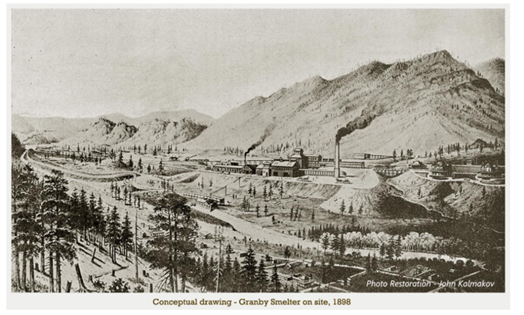
A grand opening ceremony took place on August 13, 1900, with the wagon‑delivered ore probably used for the initial firing. Once rail access was fully established, the first shipment of Phoenix ore arrived in July 1900, and full smelter production commenced on August 21, 1900. The final closing of the Granby Smelter was at some point between 1919 to 1920. The slag piles remained untouched until reprocessing of the deposited slag commenced in the mid 1980’s.
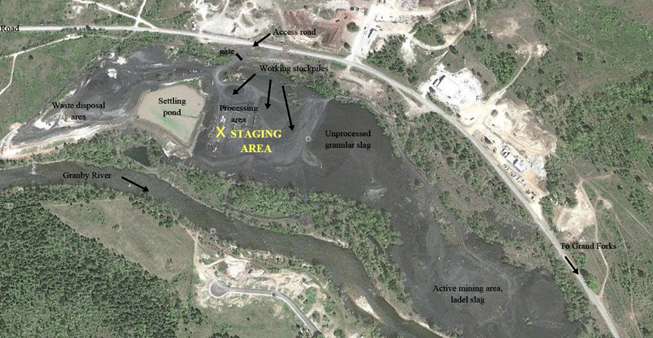
The slag deposit on the site is the byproduct of the smelter operation and has two forms – ladle slag and granular slag, with slag thickness being of variable and largely indeterminate thickness. The ladle slag was naturally and slowly air cooled, resulting in layers of pooling and gradual hardening, with a smooth finish. The granular slag was formed by water cooling of the hot slag and the rapid cooling resulted in the fracturing of the slag into separate granular pieces, and the size of the granular pieces varied depending on the temperature differential between slag and water, and the composition of the slag itself.
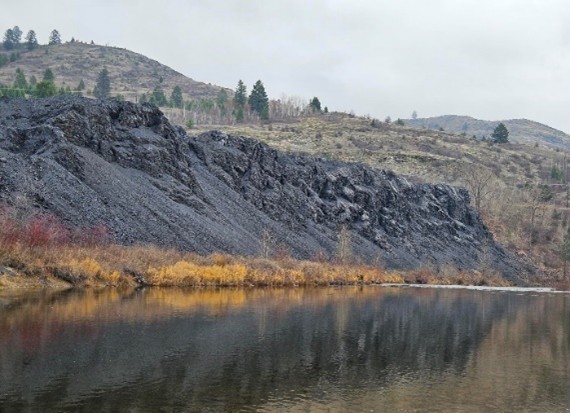
The slag cliffs adjacent to the Granby River
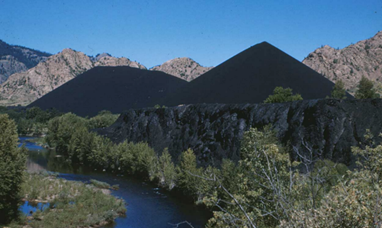
Slag piles from a 1950 photograph
There is however a potential geohazard on the eastern edge of the site where the original ladle slag cliffs have exhibited signs of granulation and decay over time, and these cliffs may pose a potential environmental risk to the Granby River environment.
Project Owner and Preamble
This Project Site is operated by the Grand Forks Reclamation Company (GFRC) under a permit issued by the Ministry of Energy, Mines and Low Carbon Innovation (EMLI) under the Mines Act (RSBC 1996)
GFRC does not conduct mineral exploration, ore extraction, or any other related greenfield mining activities. The Project involves the controlled excavation, processing, relocation, and beneficial reuse of historical slag material deposited during on-site smelting operations between 1899 and 1920.
This Project reflects the continuation of a long-standing, privately funded reclamation initiative addressing this historic industrial legacy site. For approximately five decades, GFRC has invested private capital to progressively excavate, manage, and remediate slag material originally deposited during early 20th century smelting operations. These reclamation activities have reduced environmental risk and liability, improved site stability, and advanced reclamation objectives without reliance on public funding.
As a historic industrial legacy site, the Project involves site-specific conditions that differ materially from conventional mineral extraction projects. A separate Mine Plan has been developed to address these unique reclamation circumstances within the regulatory structure of the Mines Act, recognizing the distinct context of this long-standing remediation initiative.
Project Scope Outline
The overall project scope has evolved as follows:
- Sedimentation Dam (originally termed as a Settling Pond):
- Dam Safety Review
- Dam Remediation – design and reconstruction to mitigate the identified dam safety risks
- Obtain regulatory approval (under Mines Act) for all previously unregistered water retaining structures
- Redesign the operating protocol for the Sedimentation Dam to support the 25-year Mine Plan
- Develop preliminary Sedimentation Dam Closure Plan to support Mine Closure Plan.
- Geotechnical support
- Taylor Geotechnical
- Geotechnical foundation analysis and dam stability reviews
- Mine Planning
- Sub Contractor: Moose Mountain Technical Services
- 25-year Mine Plan developed assuming the full mine cycle is approved
- Mine plan is developed in 5-year stages for ease of regulatory monitoring and approval
- Develop a Mine Closure Plan at end of mine life.
- Environmental Closure plan
- Seb-consultant: Keefer Environmental Services
- Develop a staged closure plan in support of the 25-Year Mine Plan
- Closure planning will support the finalisation of each 5-year mine plan stage
- Mitigation included in the plan to allow for possible land use changes by City regulations as mine activity is terminated.
Project Activities
In response to a Dam Safety Review (DSR) completed by a third-party consultant, GFRC appointed the professional team of RWI and Westrek Geotechnical Services / Taylor Geotechnical to undertake a review of the DSR and to prepare a remediation design for the dam in response to the risks and omissions identified in the report.
The remediation project includes the design and construction management for the lowering and relocation of the dam wall, construction of a spillway and discharge channel, reconfiguration of the access roads into the dam basin and construction of a secondary internal containment berm in response to regulator concerns.